We use cookies to measure ad performance and improve the site. Read our privacy policy.
Google Ads management
Every keyword, bid, and landing page engineered for cost and profit, not just clicks.
Free Google Ads audit
Takes about a minute
$10M+
Ad spend managed across accounts
14+
Industries specialized in
150+
U.S. accounts managed
Partner & Microsoft Ads Certified
What actually determines performance
Most agencies report on clicks and impressions. We manage against the metrics that actually control your cost per click and your return - Quality Score, CTR, and ROAS.
Google's per-keyword rating of your ad relevance, expected CTR, and landing page experience. A higher Quality Score directly lowers your cost per click and improves ad position at the same bid.
The percentage of people who see your ad and click it. CTR is the single biggest input into Expected CTR, one of three components of Quality Score - so low CTR compounds into higher CPCs.
CTR = clicks / impressions × 100
Revenue generated for every dollar spent on ads. This is the metric your bidding strategy should ultimately be optimized against - not clicks, not impressions, not even conversions alone.
ROAS = revenue / ad spend
The metric most agencies ignore
Two advertisers can bid the same amount and pay very different prices per click - the difference is Quality Score. Google scores every keyword on three components.
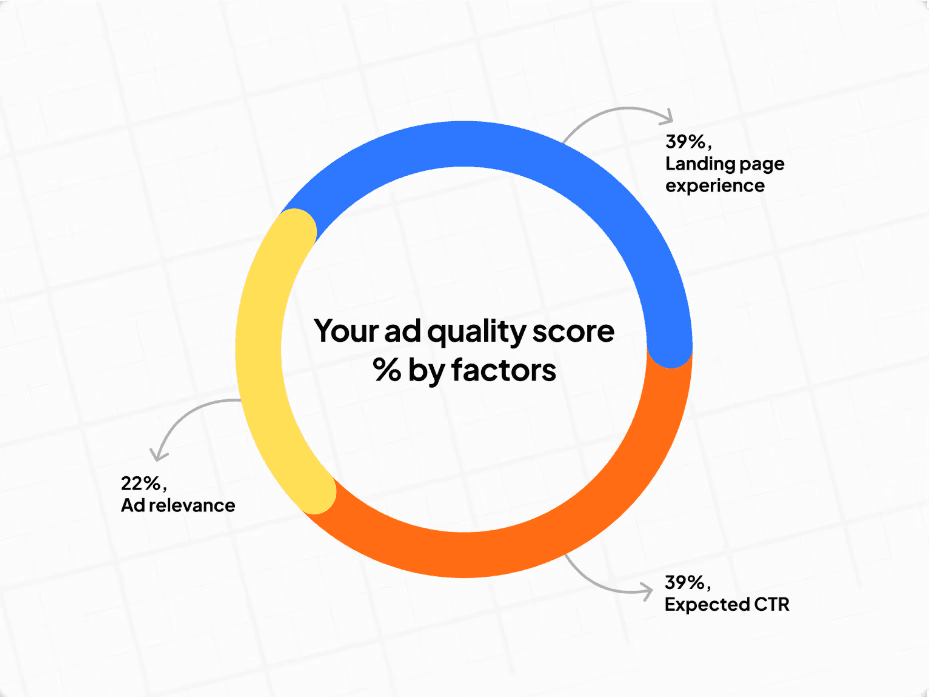
This is influenced by ad copy relevance, historical CTR performance, and how closely your headline matches search intent. It's the component most directly under your control through ad copy testing.
An ad group with 40 loosely related keywords will always score worse than one built around 5–8 tightly themed keywords with copy written specifically for that theme - this is why campaign architecture matters before copy does.
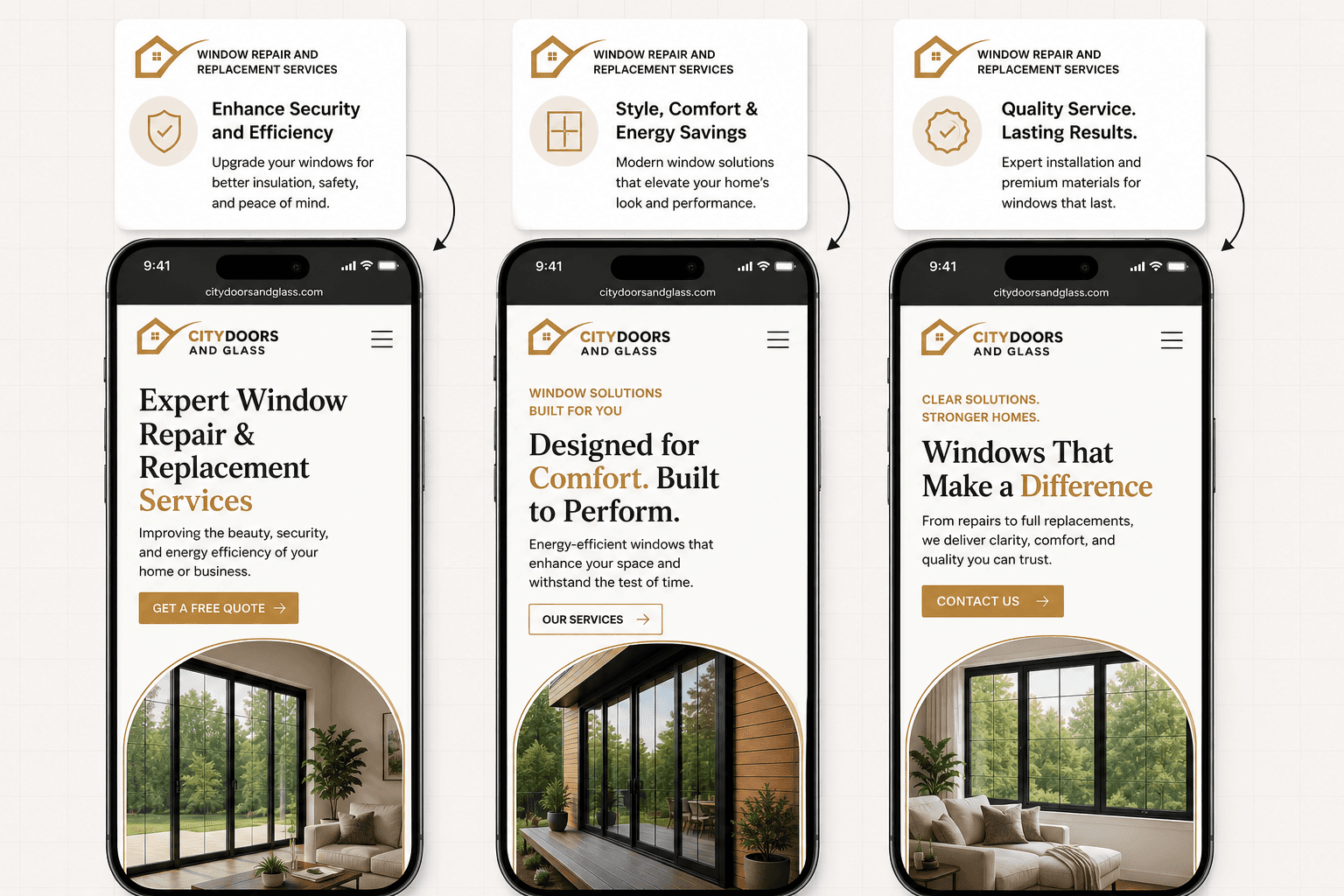
A landing page that doesn't mention the exact offer in the ad headline, or takes more than 3 seconds to load on mobile, drags Quality Score down regardless of how good the ad copy is.
Expect to pay significantly above the average CPC for your industry and keyword, often 20–50% more per click than a well-optimized account.
CPCs roughly track the market average for your industry and location - functional, but leaving cost efficiency on the table.
Meaningfully lower CPCs than competitors bidding the same keywords, and higher ad position at a lower cost - this is the target range we build toward.
Compounding effect
A higher CTR means more clicks at the same impression volume, and it lowers your Quality Score-driven CPC on every click after that. Here's the levers we pull.
Multiple responsive search ad variations tested against each other, with underperforming headlines and descriptions rotated out based on CTR data, not guesswork.
Sitelinks, callouts, structured snippets, and call extensions increase ad real estate on the results page, which directly increases CTR without changing your bid.
Phrase and exact match keep your ad showing for genuinely relevant searches, keeping CTR high - broad match without strong negatives dilutes it fast.
Splitting broad ad groups into tightly themed clusters lets headlines mirror the exact search term, which is one of the strongest CTR levers available.
Removing irrelevant search terms stops your ad from showing to people unlikely to click or convert, which protects CTR at the keyword level.
Showing ads more heavily when and where your historical CTR and conversion rate are strongest, and pulling back where they're weak.
Bidding against outcomes, not clicks
Once conversion and revenue data is flowing reliably, we move accounts onto automated bid strategies that optimize directly for return rather than for cost per click.
Google's algorithm bids higher for auctions predicted to convert at or above your target return, and lower for auctions unlikely to hit it - used once an account has enough conversion volume for the algorithm to learn from.
Optimizes for a set cost per acquisition rather than revenue - the right choice for lead-gen businesses where deal value varies less than in e-commerce.
Used with an optional ROAS target once volume is high enough, this strategy spends your full budget to generate the highest possible conversion value.
Groups multiple campaigns under a shared bid strategy and budget, letting Google shift spend toward whichever campaign is converting best in real time.
No tracking, no ROAS
Every Google Ads account we manage is built on a verified tracking stack before optimization begins - automated bid strategies are only as good as the conversion data feeding them.

Event-based conversion tracking configured for form fills, purchases, and key engagement actions, feeding directly into Google Ads as conversion signals.
Dynamic number insertion attributes phone call conversions back to the exact keyword and campaign that generated them - critical for service businesses where calls outnumber form fills.
Hashed first-party customer data strengthens conversion matching as browser tracking restrictions increase, improving the accuracy of automated bidding.
Closed-won sales and qualified-lead status from your CRM are imported back into Google Ads, so bidding optimizes for actual revenue, not just form submissions.
How we manage your account
Full account review - Quality Score by keyword, CTR by ad, current ROAS, and tracking accuracy - before any changes are made.
Ad groups tightened, negative keywords added, tracking gaps closed, and bid strategy matched to available conversion volume.
Ongoing ad copy testing, Quality Score monitoring, and bid strategy tuning as conversion data accumulates.
Budget shifted toward the keywords, campaigns, and audiences proving the strongest ROAS, with monthly reporting on all three core metrics.
Campaign types we manage
High-intent keyword targeting for people actively searching for your product or service.
Product feed-driven listings with image, price, and reviews shown directly in search results.
Automated cross-network campaigns across Search, Display, YouTube, and Gmail, optimized against your ROAS or CPA target.
Visual ads re-engaging past site visitors across the Google Display Network.
Demand Gen and video campaigns for awareness and warm-audience retargeting.
Pay-per-lead placement above all standard ads for eligible local service businesses.
What happens after you sign up
No black box. Here's exactly what the first three months of a new engagement look like.
Full account audit (or market audit if starting fresh), tracking verification, and account access granted - no changes made yet.
Campaign architecture rebuilt around your CPA target, keyword research finalized, and new ad copy drafted for review.
Restructured campaigns go live with full conversion tracking in place from the first click.
Daily monitoring while Quality Score and CTR data accumulate. Bid strategy tuned manually until there's enough conversion volume for automated bidding to take over.
Budget shifted toward the keywords and campaigns proving the strongest ROAS. Monthly reporting cadence begins in full.
How to work with us
Not every business needs the same level of involvement. Three ways to work with PPC Expert on Google Ads.
A diagnostic-only engagement. Good if you have an existing account and want a clear, prioritized report before deciding whether to bring on ongoing management.
Hands-on, ongoing management of your Google Ads account - everything in the full service scope above, managed directly by PPC Expert every month.
Certified Google Ads execution for marketing agencies that need it without hiring in-house, delivered under your own agency branding.
Technical questions, answered plainly
Ready when you are
A free Google Ads audit shows you exactly where your account stands on the three metrics that actually determine your cost and return - no generic checklist, a real number-by-number breakdown.


.svg)


.svg)